One connected operating system
Follow the client from first interest to the next visit.
A booking tool finishes its job the moment the appointment is saved. Everything that decides whether the client comes back happens after that, and almost nothing in the stack is responsible for it. We read 62 live booking pages to check: the word "cancel" appeared on three of them. That gap is the product.

Our mission
One record per person carrying the visits, the preferences and the conversation - and a system willing to say out loud who should book next, and why it thinks so.
Our story
A calendar can be full while the business quietly shrinks. Someone who came every five weeks comes at seven, then at eleven, then stops. Nobody cancels. Nothing looks broken. The month simply earns less than the last one, and no report explains why.
Booking software treats the appointment as the finish line. What follows - remembering the formula, answering the message that landed in a different app, noticing that a good client is four weeks overdue - falls to a person who is also doing the work with their hands. That labour is invisible, it never fits inside the day, and it is precisely the labour that compounds.
We wanted to know how much of it the industry actually handles, so we read the public documentation of eight booking products on one narrow question: what happens when a client simply does not arrive. We found eight different answers. In some it is a status of its own. In one it is a tick box inside cancelling. In another it is a colour the calendar turns on its own. In a fourth it is a label the reports never read. One of the eight publishes a formula for the rate. One removes no-shows from its performance reports rather than counting them.
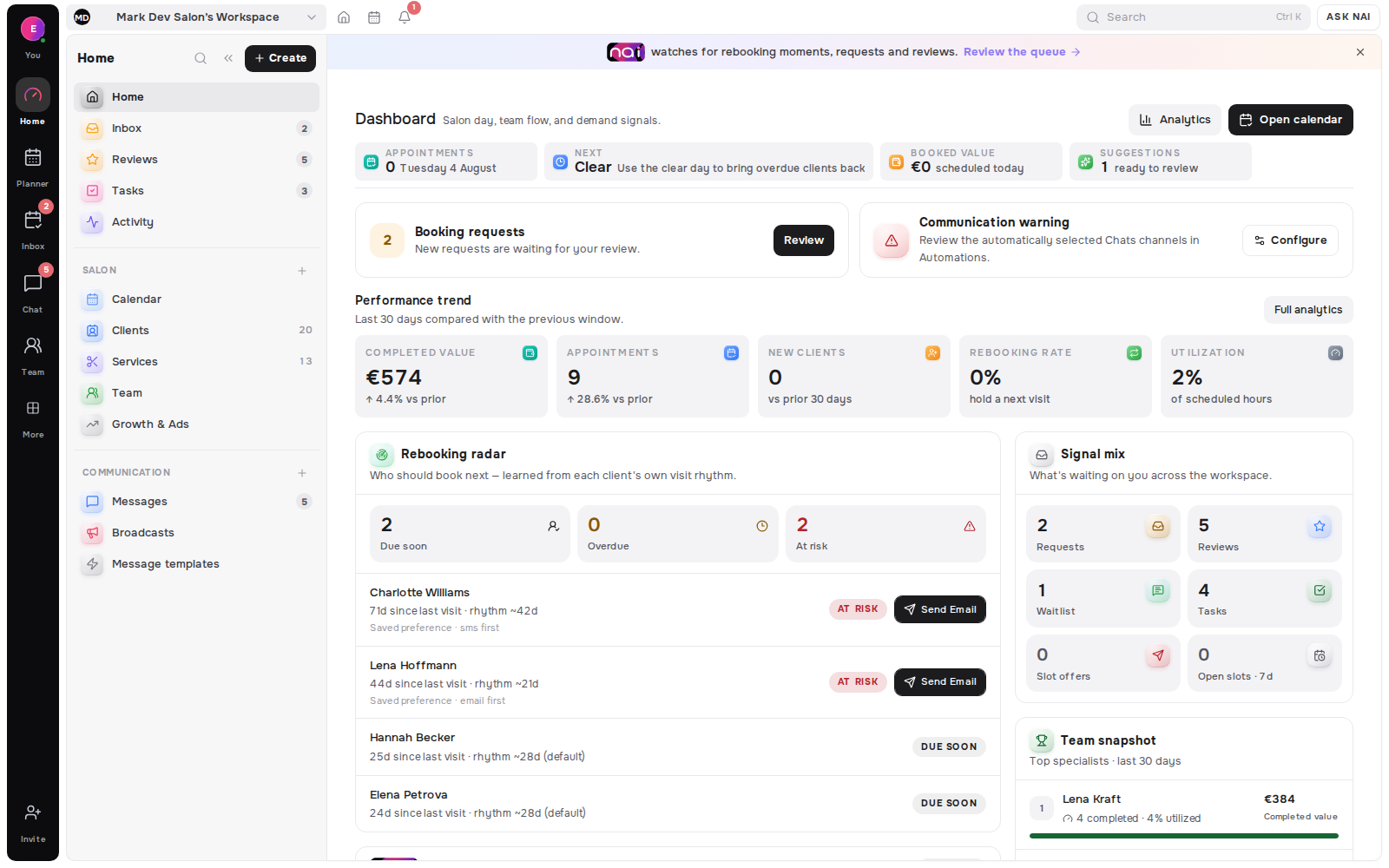
So we built the half that was missing. One record per client holds the visits, preferences, conversations and return rhythm, and booking, messages and rebooking all read from it. When Belom says someone is due back, it names the interval it measured from that person’s own history and links the visits behind the number.
The decision stays with the person doing the work. The assistant drafts and you approve; automations run only inside rules you switch on, with consent and quiet hours enforced on every channel. We also stay out of the money: deposits run through the professional’s own Montonio account, and Belom takes 0% of what a client pays. Solo specialists, shared front desks and multi-location teams all use it - the same problem wearing three different shapes.
What we are building toward
Every visit remembered. Every next one earned on purpose.
Preferences, formulas, visit history and conversations belong to one person, not to five apps and one good memory. Everything else we build reads from that record, which is why the context arrives before you need it rather than after.
The assistant prepares; you approve. Automations run only inside rules you switch on, with consent and quiet hours enforced on every channel. Software that can message your clients unsupervised is not a time-saver, it is a liability.
We publish our definitions. A no-show is a booking that reached its start time, was not cancelled beforehand and was not attended - counted against bookings whose start time has passed. If Belom says a client is due, it names the interval and links the visits. A number you cannot audit is decoration.
One problem in three shapes: the client who should have come back, and did not.
Solo
You are the front desk, the specialist and the marketing department, often inside the same ten minutes. Belom takes the parts that do not need your hands.
Teams
Several specialists, one client base, and roles deciding who sees notes, money and settings. The client should meet one business, not four filing systems.
Multi-location
Separate calendars and staff, one client history, and reporting that compares locations without flattering any of them.
Our journey
2023 - today
One question we could not answer for anybody: why does every tool stop at the appointment?
The public page, working hours, services and requests - the parts nobody can run a day without.
Visit history, preferences and every channel merged into a single thread per person.
Return cadence measured per client, with drafts prepared for approval instead of one reminder blast treating everyone the same.
Free plan included · no card required